


Introduction
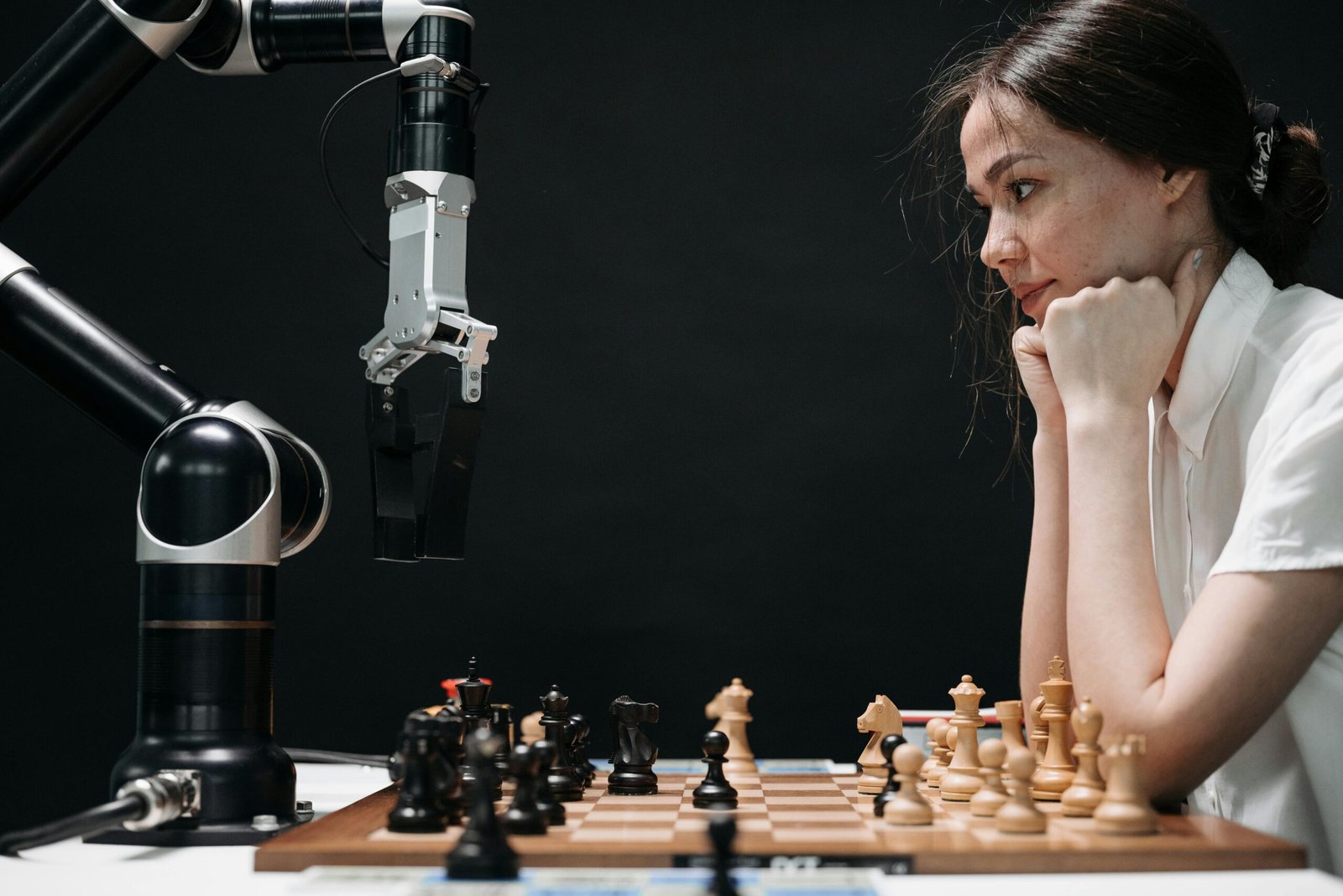
A few years ago, a chess grandmaster lost to a machine—and then, interestingly, learned from it and came back stronger. That moment wasn’t just about defeat; it hinted at something bigger. What happens when technology doesn’t just compete with human intelligence but begins to reshape it?
Technology has evolved from simple tools into powerful systems capable of learning, reasoning, and even creating. From artificial intelligence to automation, its influence is now deeply embedded in how we work, think, and live. This raises an essential question: will technology replace human intelligence, or will it redefine it?
This article argues that the future of technology lies not in replacing human intelligence but in augmenting it, transforming how we solve problems, redefining creativity and decision-making, and demanding a new balance of ethical responsibility and human oversight.
1. Technology as an Amplifier of Human Intelligence
Enhancing, Not Replacing Human Capabilities
Rather than acting as a competitor, technology increasingly serves as an extension of human intelligence. Advanced systems can process vast amounts of data in seconds, allowing humans to focus on interpretation, judgment, and strategy.
Key Examples and Evidence
- Healthcare: AI-powered diagnostic tools assist doctors in identifying diseases like cancer earlier and more accurately.
- Education: Adaptive learning platforms personalize content based on student performance, improving learning outcomes.
- Business Intelligence: Data analytics tools help organizations predict market trends and optimize decision-making.
How This Differs from Traditional Views
Earlier fears suggested that machines would replace human jobs entirely. However, emerging evidence shows a shift toward collaboration rather than replacement. Technology handles repetitive and data-heavy tasks, while humans provide context, empathy, and creativity.
Key Insight
- Technology increases efficiency.
- Human intelligence ensures meaning and direction.
2. Redefining Creativity and Decision-Making
The Rise of Machine-Assisted Creativity
One of the most surprising developments in technology is its ability to generate creative outputs—art, music, writing, and design. However, this does not eliminate human creativity; instead, it changes how creativity is expressed.
Real-World Examples
- Content Creation: Writers use AI tools to generate ideas, outlines, and drafts.
- Design: Graphic designers leverage generative tools to create prototypes quickly.
- Music & Art: Artists collaborate with algorithms to explore new styles.
Decision-Making in the Age of Technology
Technology also plays a major role in decision-making by offering predictive insights and reducing uncertainty.
- Financial systems use algorithms to forecast risks.
- Governments use data models to manage urban planning and resources.
- Companies rely on AI to optimize supply chains.
What Makes This Different
Traditional thinking assumes creativity and decision-making are uniquely human. While that remains true in essence, technology now acts as a co-creator and decision-support system, enhancing speed and scope.
Key Insight
- Machines generate possibilities.
- Humans choose what matters.
3. Ethical Responsibility and the Human Role in the Future
The Growing Importance of Human Oversight
As technology becomes more powerful, the responsibility for its use becomes more critical. Machines do not possess moral judgment—humans must guide how technology is applied.
Key Challenges
- Bias in Algorithms: AI systems can reflect and amplify human biases if not properly managed.
- Privacy Concerns: Increased data usage raises questions about security and personal rights.
- Job Displacement: Automation may disrupt traditional employment structures.
Emerging Solutions
- Ethical AI frameworks are being developed to ensure fairness and transparency.
- Governments and organizations are creating policies to regulate technological use.
- New job roles are emerging, focusing on managing and improving AI systems.
How This Stands Apart
Unlike earlier technological revolutions, today’s advancements require active ethical participation. It is no longer enough to innovate; society must also regulate and guide innovation responsibly.
Key Insight
- Technology creates power.
- Human intelligence must provide wisdom.
Conclusion
The debate between technology and human intelligence is not about competition—it is about collaboration. As explored in this article:
- Technology amplifies human capabilities rather than replacing them.
- It reshapes creativity and decision-making by acting as a powerful partner.
- It demands greater ethical responsibility and human oversight to ensure positive outcomes.
Looking ahead, the future will not belong to technology alone or to human intelligence alone. It will belong to those who can effectively combine both. Individuals and organizations must adapt by developing skills that complement technology—critical thinking, emotional intelligence, and ethical reasoning.
The call to action is clear: embrace technology, but do not rely on it blindly. Learn to work with it, question it, and guide it. The real advantage in the future will not be having access to technology—it will be knowing how to use it wisely.
In the end, technology may evolve rapidly, but human intelligence remains the force that gives it purpose.