


introduction
In late 2025, a global banking institution quietly transitioned thousands of manual regulatory compliance checks into a nighttime operated AI software/hardware system which, overall, resulted in reducing error rates by over fifty percent in total. This A.I. software utilised the regulator’s own data and required little to no interaction from customers. Most of the affected clients did not notice any of the negative impacts, however, the cost/speed/trust ramifications were monumental across all customers, implying that their respective businesses would greatly benefit from this new approach.
The results indicate that we have now reached a turning point in technological development and we’re now well past the exploratory phase and well into the true practical application phase of technological advancements. As a result, businesses, government agencies, and individuals are no longer asking the question of whether or not to embrace and deploy new technologies, but how fast to embrace and deploy them responsibly. Any businesses seeking to achieve success in any industry or market segment will need to understand which trends will actually create significant value in the future as well as understand how those trends differ from other prior innovation waves.
This article discusses the three dominant technology trends for 2026 that you should be aware of are; the widespread application of applied artificial intelligence through A.I. systems, the increased use of intelligent automation and robotics, and the mass adoption of spatial and immersive technologies. Collectively, these three trends represent where technology is heading, and more importantly, how the evolution of technology will impact the next decade of our lives.
Artificial intelligence is no longer just a research experiment
AI will become an integral part of the structure of our businesses. A major factor driving this shift from experimentation to business value is the use of AI directly in driving business decisions, business processes, and customer experiences within organizations rather than simply testing and piloting it.
Examples of AI becoming part of the foundation of businesses include:
- AI is helping businesses make better decisions within existing operational processes.
- AI is being integrated into productivity tools and software development tools and enterprise systems as a co-pilot to assist business users to become more productive at their jobs.
- AI decision intelligence systems (combining analytics with business rules and machine learning) will help businesses with digital transformation initiatives.
- Domestically trained AI models are being used to develop AI decision intelligence systems for various industries (e.g., healthcare, finance, manufacturing).
- Whereas earlier waves of AI focused primarily on prediction, the current wave of AI focuses on action—i.e., the AI system will automatically recommend or take action based on its prior experiences.
Real Use Cases
Hospitals have used AI to prioritize patient care and optimally staff their facilities.
Retailers have implemented real-time pricing engines that use AI to adjust pricing based on demand.
Cybersecurity platforms have developed AI technology that can detect and respond to threats without human intervention.
The above examples demonstrate that AI improves cost savings, increases accuracy, and speeds up response times when used in business processes.
What is Different About AI in 2026 vs. AI in the Past
The reasons for failure in the past with AI initiatives were related to poor data quality, lack of trust in the model, or insufficient clarity around the business benefits.
In 2026, AI will include governance and transparency from the design phase onward.
The models themselves will be smaller and more efficient than traditional models, and therefore, more easily developed and implemented.
Intelligent Automation and Robotics Transforming The Workplace
Where Software Meets Physical Automation
2026 will see intelligent automation as being smarter (w/AI), more adaptable, and aware of humans. Intelligent Automation (IA) was first seen, through the merging of Robotic Process Automation (RPA) functionality with natural language processing (NLP) capabilities, machine vision capabilities, and AI functionality; the physical robots have started leaving the protected (controllable) environment of the factory floor for uncontrolled (dynamic) environments.
Some key features of the evolving automation landscape include:
- Collaborative robots (cubits) that work safely with humans.
- Autonomous mobile robots (AMRs) in logistics, health care and retail.
- AI-enabled orchestration of workflows across multiple departments & systems.
- The combination of software & physical automation is creating a new level of capability for companies to automate not only repetitive tasks but also complex tasks.
Industry Examples:
Warehouses adaption of routes in real-time based on demand using robots.
Insurance companies automating the complete claims process.
Construction companies applying Robotic Systems to complete dangerous tasks.
The primary result is the unbundling of job functions, whereby automation technologies are providing people with the ability to focus on value-added tasks and not necessarily replacing the person’s job.
What’s different about 2026 than previous years?
Historically, automation had a significant barrier to entry and was considered cost-prohibitive to implement. However:
- Cloud-based platforms reduce time for implementation.
- AI-enabled systems provide the opportunity to learn from previous exceptions.
- User interfaces are designed for non-technical employees to use effectively.
- The significant driver for change will be accessibility of the technology. Intelligent Automation is no longer just an option for large corporations, rather it is becoming a realistic option for mid-market companies.
Spatial and Immersive Technology Hits Mainstream
Moving Past the VR Hype
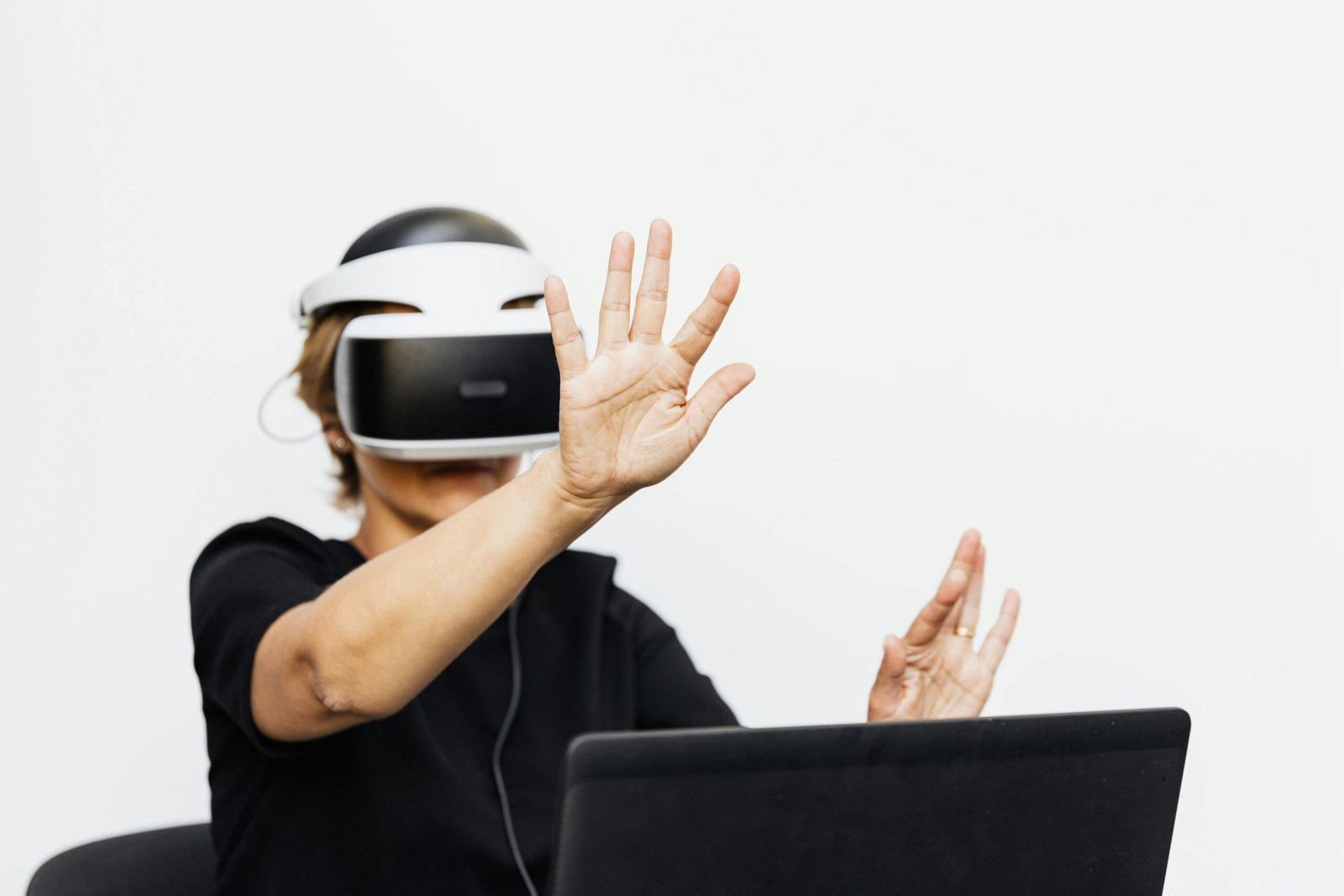
Immersive technologies have long been associated with gaming and niche training, but in 2026, spatial computing or blending of digital information into our physical environment will have reached a level of practical maturity.
The trend can be summed up as follows:
- Real-Time Guidance and Visualization via Augmented Reality (AR)
- Collaborative Work and Simulation via Mixed Reality (MR)
- Replication of Real-World Assets/Environments via Digital Twins
This widespread adoption will be supported by improved hardware, better connectivity, and more user-friendly software.
Examples of Practical Usage Include:
- Field technicians using AR glasses as hands-free instructions during repairs
- Architects working together in 3D models of buildings
- Manufacturing companies simulating production changes with the use of digital twins
These uses will decrease errors, reduce time to train, and improve decision-making.
Difference from Previous Concepts of the Metaverse
Unlike previous visions of the “metaverse,” (which were broadly consumer oriented), in 2026, immersive technologies are:
- Task-Based rather than entertainment based
- Integrated with existing systems in an enterprise
- Designed to solve a particular business problem
The actual value is based on the context of the use of the technology rather than the technology alone. When spatial technology is enhancing real-life work, then the likelihood of adopting this technology is high.
calculation
Through execution, not experimentation, the future of technology looks very different than it does today (2026). We have established that artificial intelligence will provide a foundational platform for decision making in today’s world through the advances that come with AI systems and technology development. Automation and robotics continue to change how businesses operate by blending human intelligence and machine speed. XR and virtual reality technologies will continue to change how people work, learn, create, and collaborate by no longer being a novelty to businesses but becoming an essential business tool or technology in the workplace.
As we look into the future, companies that will be successful will:
- Invest in technology that supports business goals
- Understand the importance of governance, ethical behavior, and training their employees to be successful with modern technology solutions
- Concentrate their efforts on integrating solutions versus just innovating in a silo
The future of technology will not be about following every trend but rather, companies making strategic choices on the correct trends to follow and executing those strategies effectively.
The call to action
for you to review your strategy for implementing technology and upskilling your teams. Moving forward from a mindset of being aware of new technologies to an act of implementing them effectively through your IT strategy. In 2026, the companies that have the greatest clarity of purpose and direction will be the ones to shape the future of digital evolution.